A huge opportunity to rethink care worker roles – what’s stopping us?
Should care workers provide low level mental health support? Be skilled in recognising the warning signs of suicide? Administering insulin to diabetic people in the community? Develop specialist knowledge and skills in caring for people with Alzheimer’s? Better understand and be skilled in working with hoarding behaviours?
The list goes on and the potential is enormous:
· Potential for more early intervention and prevention within our communities
· Potential for improved outcomes for people who need the support
· Potential to keep more people out of hospital and living safely at home
· Potential to create more capacity to enable professionally registered people like social workers and nurses to focus on more complex support
· Potential to attract more people attracted to the profession of social care because care workers are trusted, valued, invested in and able to access development and training that evolves care as a skilled profession in its own right
· Potential for better retention with pathways into a plethora of different roles
““So much potential and all of it possible if we are willing to work together and think differently””
All of this is possible.
How do I know? Because Tameside in Greater Manchester have already started down this path by training care workers through “blended roles” to become competent and confident in assessing for pressure sores, changing dressings and administering insulin. This is known in other places as “delegated healthcare” and lots of other places are struggling to get going with it.
Two years ago, I was commissioned by NWADASS to capture the learning from Tameside to better understand how they’ve been able to make such progress when others haven’t and how we might enable others to draw on this learning. Now I’m back. I’ve been recommissioned to see what’s happened during the last two years and to work with the North West Workforce Collective to better understand how we secure the right conditions in our social care systems for workforce transformation to happen.
Once again, social care is a hot topic. It’s been fantastic to hear Andy Burnham recognise the skills, talents and value that care workers bring and finally it feels like there’s some hope that change may happen. But it won’t happen if we keep thinking like we’ve always thought and keep doing the things we’ve always done.
I’ve been out in Tameside talking to care workers, seniors and managers who work in care provider organisations. There are two stand out things that I’m consistently hearing:
1. The nature of care work has radically changed over recent years to reflect the growing complexity of conditions that people are living with in the community.
2. Care workers are hungry for development. They are already working to support people with complex health and care needs. They know they could do more and they are hungry to develop the skills that would enable them to do this. They also want the recognition that they deserve, and this looks like increased pay, more trust and recognition by other professionals as well as by society, and more opportunities to evolve and progress to different roles in time.
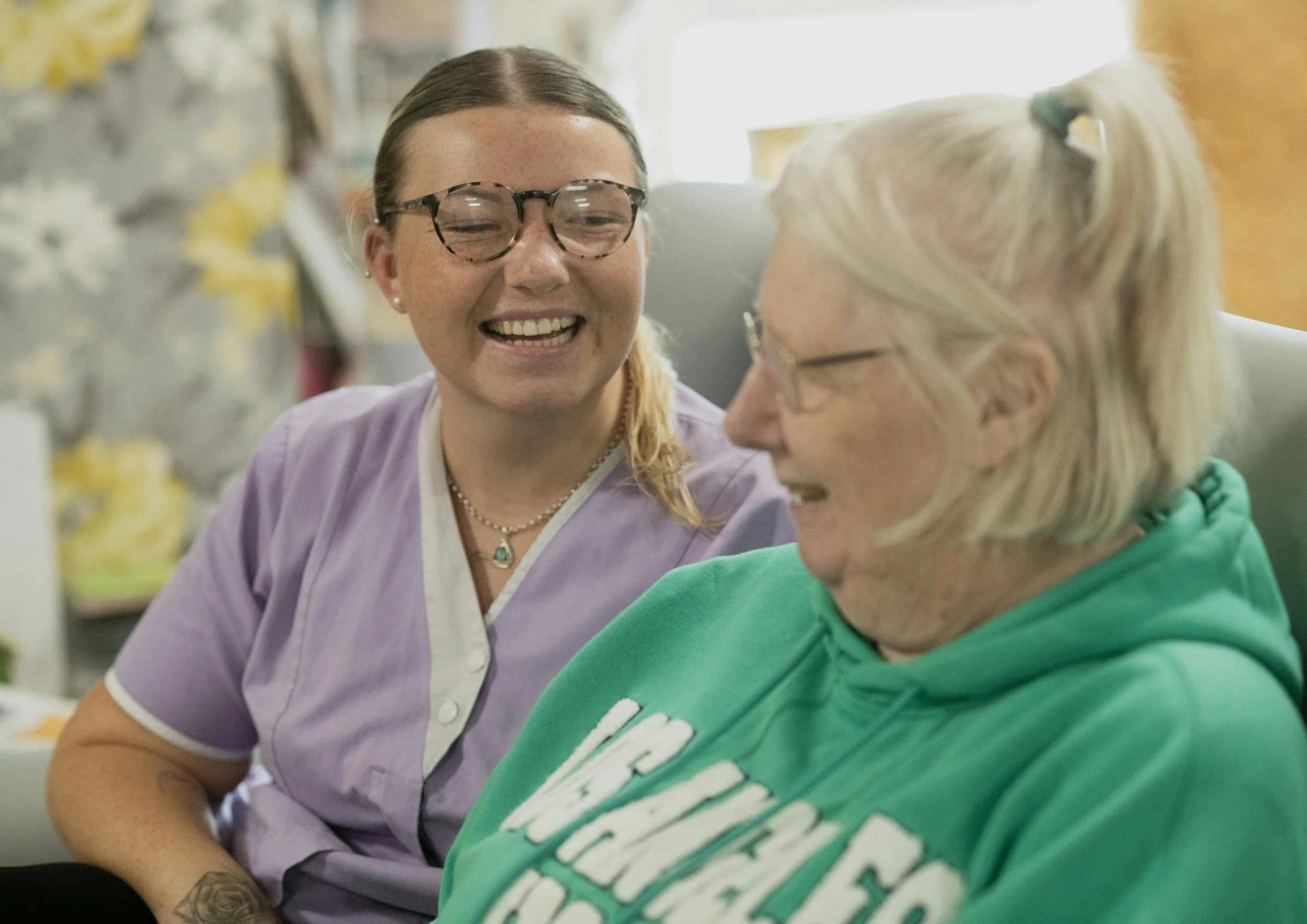
Care workers are already working with increased complexity
They are hungry to learn new skills
Making this change happen requires different working at a systems level. We have to develop the right conditions that enables care providers and their workforce to thrive. This means we have to:
· Work across different professional boundaries and organisations – within social care and also across into education and training providers, the NHS
· Build new relationships across professions so that we understand each other better, learn how to work differently together and support each other to thrive
· Be open to re-thinking how we organise and design job roles – and equip and enable small providers to draw on or grow their own change makers to do this
· Rethink commissioning relationships and approaches
· Develop new creative, face to face, participative learning opportunities that lead to recognised qualifications that are transferable across different social care providers
· Work out how to secure the right change maker capacity to work with councils and their partners to achieve these changes
The enhanced care worker role within the Care Workforce Pathway for social care is a helpful start. My hope is that it provides a baseline from which to innovate and rethink roles from a whole systems perspective. Tameside are showing that when you trust, value and invest in your workforce, they do amazing, brilliant work that bring benefits not just to the care staff and the people they are supporting but to the wider place-based system that they are part of.