This is what delivering change through a relational approach looks like in practice
I was fortunate to attend a recent Ideas Alliance learning event where I got to listen to the very brilliant Katie Fleeman from Liverpool Combined Authority. Katie is leading a very grounded, relational approach to change working with homelessness commissioners from across the city region.
I was struck by Katie’s honest, straightforward and real description of how she is affecting change. She said some things that on the surface feel very simple and yet for those of us navigating change in complex public sector systems, we know they are anything but. I felt a really strong connection with what Katie talked about and her learning aligns very much with my own.
Here are some of Katie’s gems of wisdom together with some insights from me about what she made me think about:
· “People have not become more complex over the last 30 years, we’ve designed more complex systems around them”. This is such important reframing and puts us firmly back in a position of being able to do something about the complexity we are working with. We have it in our gift to de-complexify public services should we choose to do so.
· “We commission for learning not unrealistic outcomes that will never be met”. This is bold and brave and demonstrates an authentic understanding of people-focused change. It recognises that success looks different for different people. It challenges the status quo where we are expected to be able to measure and quantify everything. It creates a safe space for commissioners and providers to say we don’t have all the answers yet but we’ll work together to try to work out what the solutions are.
· “We measure learning by getting around the table with our providers to understand what’s working well and what’s getting in the way. We then work together to find ways of breaking down those barriers”. This took me back to my days as a District Manager for Children’s Services in the days of the Common Assessment Framework – an attempt to harmonise assessments across multiple agencies, to draw the right support around a person in a way that worked for them with a “lead professional” at the centre who built that key relationship with the person being supported and brokered in the right support. It was common to have Team around the Child meetings and I remember setting up and Chairing Team around the Professional meetings in recognition that when practitioners got stuck, they had no where to go. As Katie said “You have to let go of power and control and recognise that you don’t know everything”. Bringing organisations together to learn, reflect, appraise different options and agree together where to go next is transformational for front line staff trying to navigate the complexities of multiple service offers, pathways and personnel.

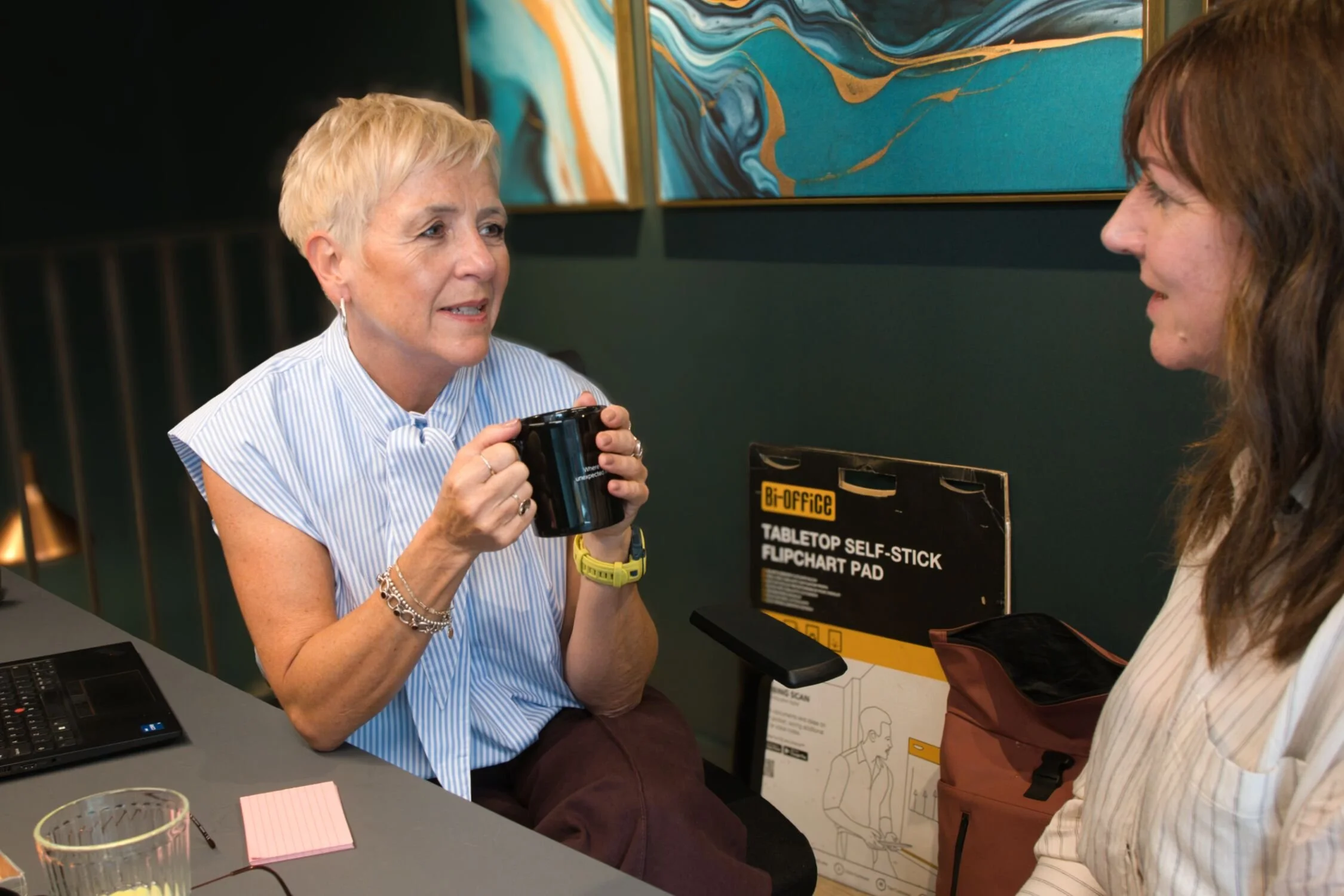
People getting around the table to discuss work
· “The biggest thing you have to build is trust”. This is the single biggest theme that comes through my work on transforming public services and working in complex systems. It’s not difficult: take time to get to know and understand each other personally and professionally; have honest respectful conversations; do what you say you’re going to do, or if you can’t, explain why. When trust exists, it’s so much easier to make change happen so why are we not more explicit in helping people to understand how to do it and why it matters?
· “Working in a relational way means you constantly have to restart and reset as new people come on board but you build momentum as you start to see change” This is probably the second biggest theme that comes through my transformation work. I truly believe that relationships are what makes change happen but I’ve been toying with a question recently. Do we, and if we do, when do we, need to systematise change that’s happened through the relationships that exist, if we want to sustain that change when key people move on or organisations restructure? If we do need to do this, how do we do it in a way that retains the dynamism, realism and flexibility made possible through relational change? Do we have to accept that Katie’s experience of constantly having to restart and reset is just part and parcel of this way of working or can we wrap enough systematic aspects of change around it that help to maintain, sustain and continue to grow it without losing its magic when people move on?
· “We have to give people permission to develop new skillsets” This speaks to Katie’s earlier point about the complex public sector systems that we have built. If we want people to be able to access truly person-centred support in ways that work for them, in a sequence that delivers real impact and in a smooth timely way, that doesn’t stop and start as different organisations get involved, we need people who know how to navigate our systems. We should not expect public sector workers to know how to do this without support and we certainly shouldn’t expect the people we are supporting to be left to do this for themselves. It’s Louise Casey’s point about people’s experiences of trying to secure the right health and social care support. When we talk about change makers, we have to talk about system navigation because real impactful change for people requiring support is rarely about support from a single organisation.
““You have to let go of power and control and recognise that you don’t know everything”.”
· “Once you start writing everything down, you go down that rabbit hole of doing what you’ve always done”. This from Katie has really resonated with me as someone who has been commissioned to capture the learning from an example of workforce transformation where the major learning to emerge is relational. I’ve been thinking very hard about how to describe what I’ve learned and what would be most helpful to people who want to draw on the learning. I’ve not got to the answer yet but I’ve got Katie’s words firmly implanted in my mind. If I try to write it down, am I going to lose the most interesting and human aspects of change? And what might I do instead? One to ponder. Watch this space……….
Thanks to Katie for sharing her brilliant insights and to Ideas Alliance for hosting such a thought-provoking learning event.